Specifications
| Property |
Detail |
| Board size |
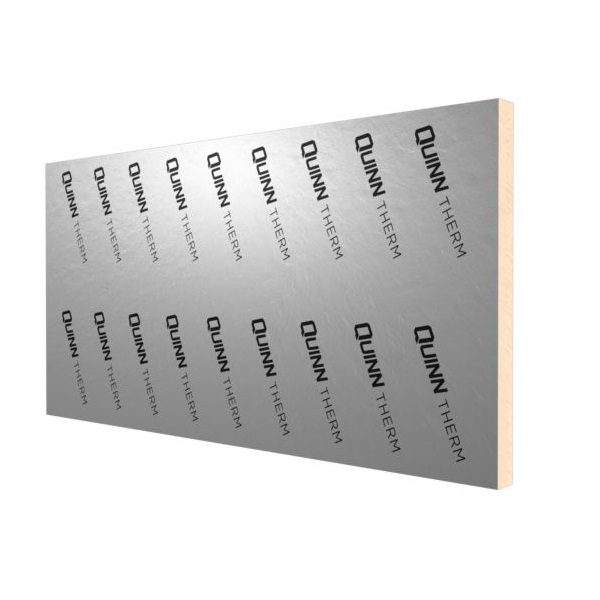
2440mm x 1200mm |
| Available thicknesses |
25mm, 50mm, 75mm, 100mm, 120mm, 150mm |
| Board coverage |
2.93 m² per board |
| Core material |
Rigid thermoset PIR (polyisocyanurate) |
| Facing |
Low-emissivity composite foil, both sides |
| Thermal conductivity |
0.022 W/mK |
| Compressive strength |
>140 kPa |
| Fire rating |
Euroclass E (BS EN 13501-1) |
| Fibre content |
Fibre-free |
R-Values by Thickness
R-value measures the thermal resistance of the board itself – the higher the R-value, the better the board resists heat flow. Based on the board’s thermal conductivity of 0.022 W/mK, R-values by thickness are:
| Thickness |
R-value (m²K/W) |
| 25mm |
1.13 |
| 50mm |
2.27 |
| 75mm |
3.40 |
| 100mm |
4.54 |
| 120mm |
5.45 |
| 150mm |
6.81 |
R-Value vs U-Value – What Is the Difference?
R-value measures the thermal resistance of the insulation board on its own; U-value measures the overall heat loss of a complete wall, roof, or floor build-up, including all materials in the construction – brick, blockwork, cavity, plasterboard, and the insulation itself. Because U-value depends on the full construction makeup, not just the insulation board, it cannot be quoted for the board in isolation – the same PIR board will produce a different U-value in a cavity wall than in a flat roof or suspended timber floor. To determine the U-value for your specific build-up, use a U-value calculator that accounts for all layers in your construction, or consult your building control officer or architect. As a general principle, increasing insulation thickness lowers the U-value (improves performance), and current Building Regulations Part L set minimum U-value targets that vary by building element and project type.
Applications
Mannok Therm PIR is designed for use across floor, wall, and roof applications in both new build and refurbishment projects. Typical uses include:
- Floors – the board’s compressive strength (>150 kPa) allows it to withstand dead and imposed loads transmitted through the floor, making it suitable beneath screed or as part of a suspended timber floor build-up
- Walls – used as cavity wall insulation, internal wall insulation, or external wall insulation behind render or cladding systems
- Roofs – suitable for warm-pitched roofs and flat roof constructions; the low-emissivity facings increase the thermal resistance of any unventilated air space adjacent to the board, improving overall roof thermal performance
- Refurbishment projects – upgrading the thermal performance of existing floors, walls, and roofs where insulation is being retrofitted
How Much Insulation Do You Need?
Each board covers approximately 2.93 m² – divide your total floor, wall, or roof area by this figure to estimate the number of boards required, then add an allowance for cutting and waste around edges, joists, or obstructions. The correct thickness for your project depends on the specific U-value target for that building element under current Building Regulations, the existing construction, and whether the project is a new build or refurbishment. Always confirm the required thickness with a U-value calculation for your specific build-up before ordering.
Installation Notes
Mannok Therm PIR boards should be installed with all joints tightly butted to minimise thermal bridging, and any gaps taped using a compatible foil tape to maintain the continuity of the low-emissivity facing. For floor applications, ensure the substrate is sound, dry, and free of sharp debris before laying boards. For wall and roof applications, follow the fixing density and method appropriate to the specific construction type and wind zone – mechanical fixings, adhesive, or a combination may be required depending on the application.
You Will Also Need
- Plasterboard – for internal lining over insulated stud walls
- Membrane – vapour control and breather membranes for roof and wall builds
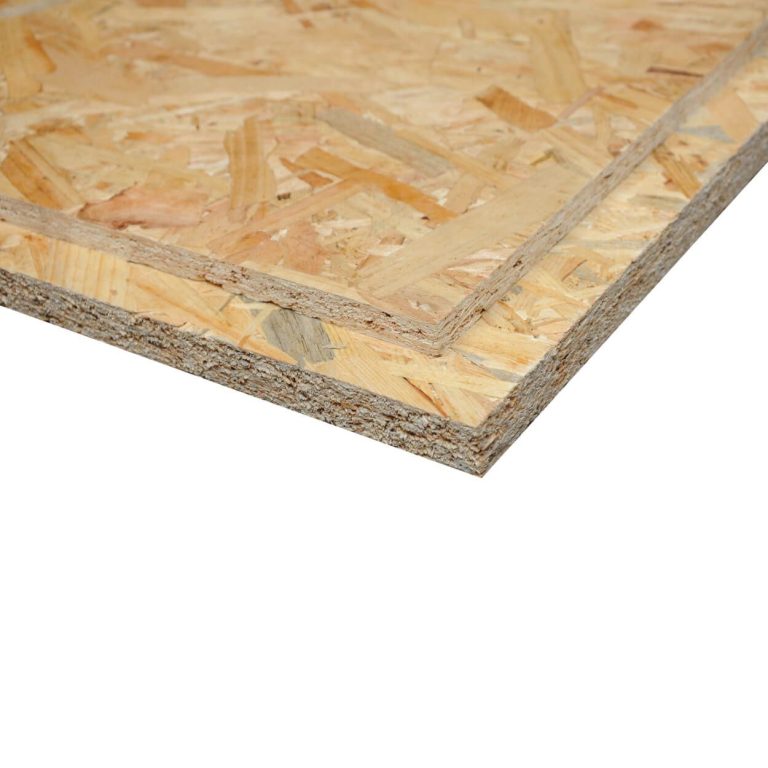
- OSB – structural decking or sheathing to pair with insulated floor and wall builds
Frequently Asked Questions
What does PIR stand for, and how does it differ from other insulation types?
PIR stands for polyisocyanurate, a rigid foam insulation. Compared to mineral wool or fibreglass, PIR offers a lower thermal conductivity per millimetre of thickness, meaning a thinner PIR board can achieve the same insulation performance as a thicker board of a less efficient material – useful where space for insulation is limited.
Can Mannok Therm PIR be used in damp or humid locations?
Yes. PIR insulation board is moisture resistant by nature of its closed-cell foam structure, making it suitable for use in damp or humid environments without compromising thermal performance, though correct detailing (vapour control layers, membranes) is still required depending on the specific build-up.
What thickness of PIR insulation do I need?
The correct thickness depends on the specific U-value target for your building element under current Building Regulations Part L, plus your existing construction and whether the project is a new build or a refurbishment. There is no single thickness that suits every project – use a U-value calculation for your specific build-up, or consult a building control officer or architect.
Does this board have a fire rating?
Mannok Therm PIR boards carry a Euroclass E fire rating under BS EN 13501-1. Always check the current fire safety requirements for your specific building type and application, particularly for buildings subject to additional fire safety regulations.
How is Mannok Therm PIR different from Celotex or Kingspan?
Mannok, Celotex, and Kingspan all manufacture PIR insulation boards with broadly similar thermal performance, as all are governed by the same European testing standards. Differences typically lie in specific product ranges, facing types, and certification for particular applications – check the technical datasheet for each brand if your project specifies a particular product by name.