Specifications
| Property |
Detail |
| Sheet size |
2.44m x 1.22m |
| Available thicknesses |
11mm, 18mm |
| Board type |
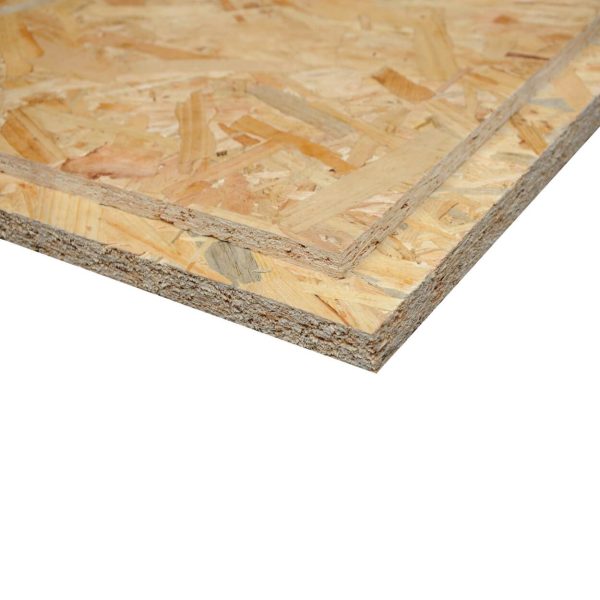
OSB3 (oriented strand board) |
| Moisture rating |
Suitable for humid conditions (load-bearing) |
| Construction |
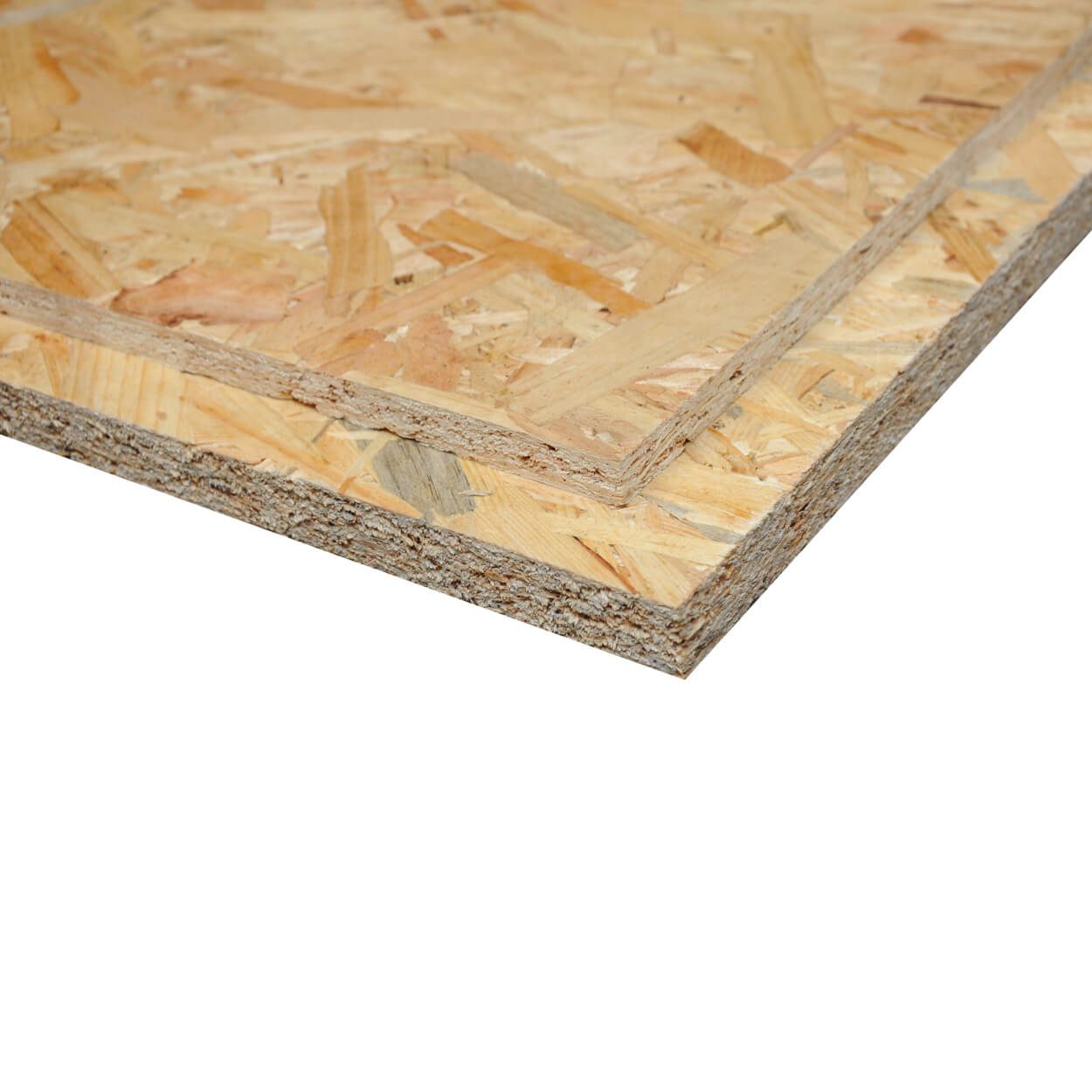
Layered wood strands, oriented and bonded with wax and resin adhesive |
| Also known as |
Sterling board |
Also available in Tongue & Groove: OSB3 is also stocked as a Tongue & Groove board – an interlocking version whose edges lock together, making it better suited to structural flooring because it removes the need for noggins under every joint.
What Does OSB3 Mean? Understanding the Grading System
The “3” in OSB3 refers to the board’s moisture resistance class under BS EN 300, indicating it is suitable for load-bearing use in humid conditions – not just dry interior use. OSB is graded OSB1 through OSB4: OSB1 and OSB2 are for general-purpose and dry-condition structural use only, while OSB3 and OSB4 are rated for humid conditions, with OSB4 carrying a higher load-bearing capacity for heavy-duty structural applications. OSB3 is the most widely used grade in UK construction because it covers the majority of structural uses, including those exposed to occasional damp conditions during and after construction.
11mm vs 18mm – Which Thickness Do You Need?
The 11mm OSB sheet suits sarking, sheathing, and lining applications, while the 18mm sheet is the standard choice for structural flooring and loft boarding.
| Thickness |
Typical use |
| 11mm |
Roof sarking, wall sheathing, site hoarding, non-structural lining |
| 18mm |
Structural flooring, loft boarding, heavier-duty structural panels |
The correct thickness for any structural application depends on joist or stud spacing, span, and expected load – always check manufacturer span tables or building regulations guidance for your specific project before specifying thickness for a load-bearing application.
Applications
OSB3 is used across structural and non-structural construction applications wherever a strong, cost-effective wood-based panel is needed. Common uses include:
- Flooring – structural floor over joists in new builds, lofts, and renovations
- Roofing – roof sarking board beneath roofing felt or membrane, providing a continuous structural deck
- Walling – wall sheathing for timber frame construction, providing racking strength and a fixing substrate for cladding or insulation
- Site hoarding – temporary construction site boundary screening
- Pallet tops and industrial packaging – cost-effective base material for pallets and crating
- General construction – sub-floors, partition linings, and structural bracing
Installation Notes
OSB3 should be installed with a small expansion gap at board edges (typically around 3mm between boards, with a larger perimeter gap left at walls) and supported on joists or studs at the spacing specified for the board thickness and intended load. Stagger joints between rows of boards rather than lining them up to spread the load and improve overall rigidity of the structure. For flooring applications, boards are typically glued and screwed or nailed to joists; for roofing, boards are nailed to rafters or roof trusses following the membrane or felt manufacturer’s fixing guidance.
You Will Also Need
Frequently Asked Questions
What is the difference between OSB2 and OSB3?
OSB2 is rated for structural use in dry conditions only. OSB3 is rated for structural use in humid conditions, making it suitable for a wider range of applications, including roofing and flooring, where some moisture exposure is likely during or after construction.
Can OSB3 be used outdoors?
OSB3 is moisture-resistant and can tolerate humid conditions and occasional wetting, but it is not designed for permanent outdoor exposure without additional weatherproofing such as a roofing membrane, cladding, or paint system. For permanently exposed external applications, an appropriate weather-resistant covering should always be used over OSB3.
Is OSB3 the same as chipboard?
No. OSB is made from larger wood strands oriented in specific layers for strength, while chipboard (particleboard) is made from smaller wood particles bonded together with less directional strength. OSB generally offers better structural performance and moisture resistance than standard chipboard.
Does OSB3 need to be treated before use?
No additional treatment is required for standard structural use. The wax and resin binders used in manufacturing already provide the moisture resistance rating for OSB3. If used in a permanently damp or exposed location, additional protective measures (membrane, paint, cladding) should be added rather than treating the board itself.
What is “sterling board”?
Sterling board is simply another common trade name for OSB (oriented strand board) in the UK – the two terms refer to the same product.